Products Center

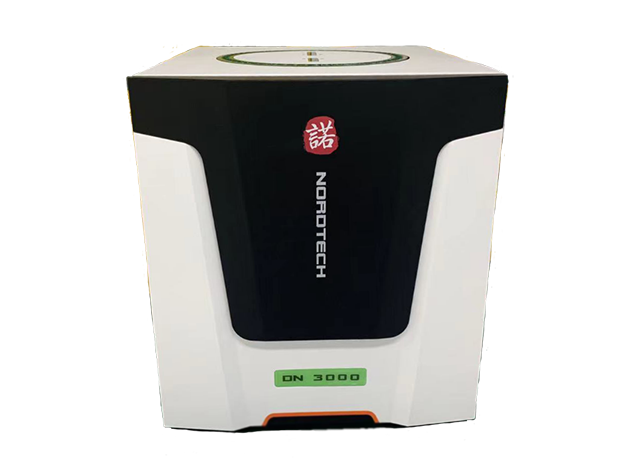
Full-series premium instruments. Precision technology for every industry DN3000 Dumas Nitrogen Analyzer
DN3000 Dumas Nitrogen Analyzer

Product Introduction

The DN3000 is a next-generation Dumas nitrogen analyzer launched by Beijing Nordtech Instrument Co., Ltd. in 2023. It utilizes helium (He) or carbon dioxide (CO₂) as the carrier gas, enabling a lower detection limit. The two-stage combustion and single-stage reduction design ensures complete sample combustion and conversion, delivering more accurate data. Innovatively employing tungsten metal as the reducing agent, it offers three times the reduction efficiency of conventional copper-based reducers. Featuring magnetically controlled micro-ball valve injection technology — a globally mature and leading sampling technique — it is characterized by quiet, noise-free operation, no need for auxiliary gases for injection, a simple and robust structure, easy maintenance, and strong anti-interference capability.


Main Technical Specifications

ParameterSpecification
Analytical MethodDumas method
CalibrationNon-linear calibration curve with long-term stability
Sample WeightSolid samples: up to 1.5 g; Liquid samples: up to 1.5 mL
Dynamic Measuring Range0 – 500 mg N absolute (or 100% N)
Detection Limit20 ppm N
Measurement Precision0.5% RSD
CalibrationMulti-point calibration with long-term stability; calibration curves can be stored on PC
Autosampler60 / 80 / 120 positions optional
Required GasesCO₂, O₂
Instrument Control and Data ProcessingPC-based, running under Windows operating system
Power Supply200-240 VAC, 50/60 Hz, 1.6 kW
Dimensions460 mm × 460 mm × 480 mm (L × W × H)
WeightApprox. 60 kg


Technical Advantages
1 Advanced micro ball valve injection technology
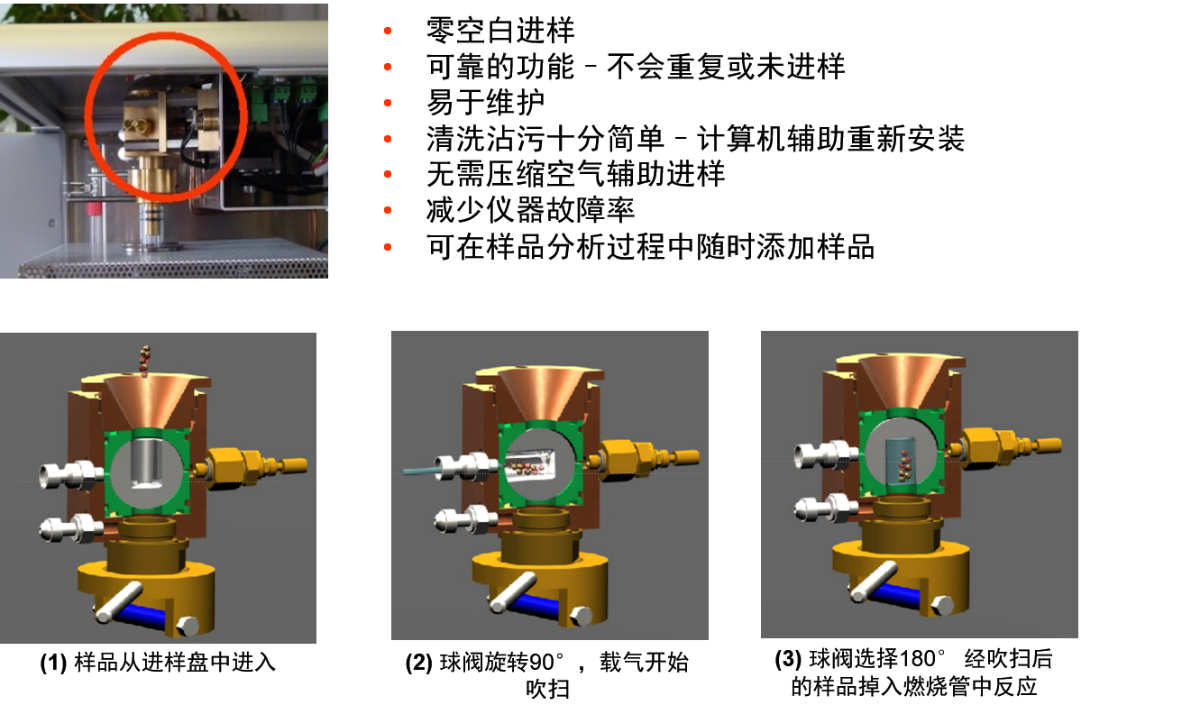
he sample is introduced by the autosampler and first falls into a specially designed micro ball valve. The sample injection process is controlled by rotating the ball valve. After the sample falls into the ball valve, the valve is first rotated 90°, and carrier gas is used to purge and completely remove any air from the sample. The valve is then rotated another 90°, allowing the sample to drop into the combustion tube. Once the sample has entered the combustion tube, the valve is rotated 180° to prepare for the next injection. This approach completely eliminates interference caused by air during the injection process, ensuring zero-blank injection. The structural design is simple, offering high reliability and easy maintenance.
Advanced micro ball valve injection technology
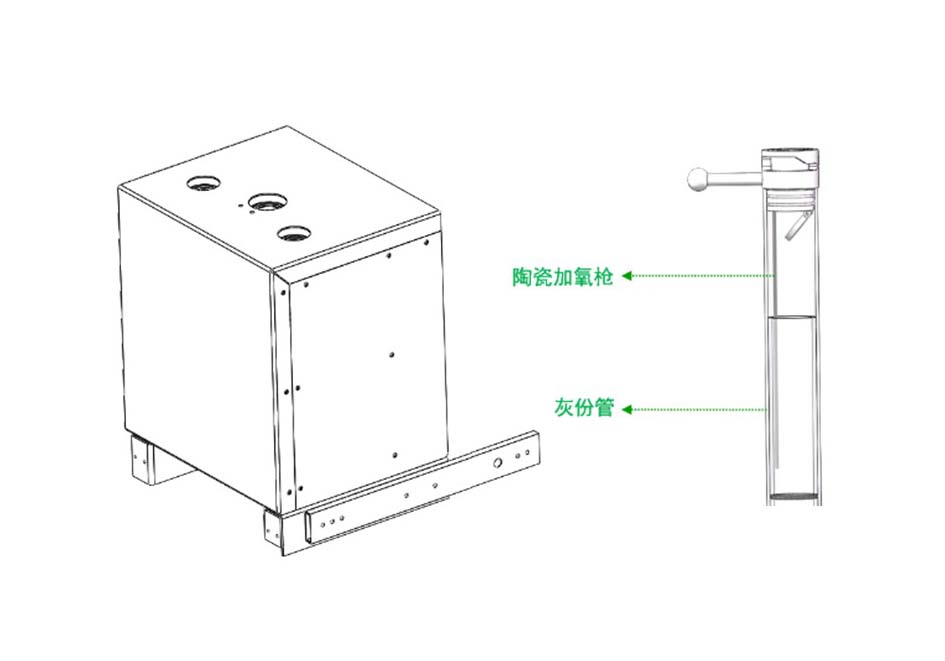
2 Slide-rail combustion furnace for easy maintenance — ash cleaning can be performed without cooling down the furnace
The combustion furnace is mounted on slide rails for convenient maintenance, allowing ash residue to be removed without the need to cool the furnace.
Slide-rail combustion furnace for easy maintenance — ash cleaning can be performed without cooling down the furnace
3 Independently Temperature-Controlled High-Sensitivity Thermal Conductivity Detector
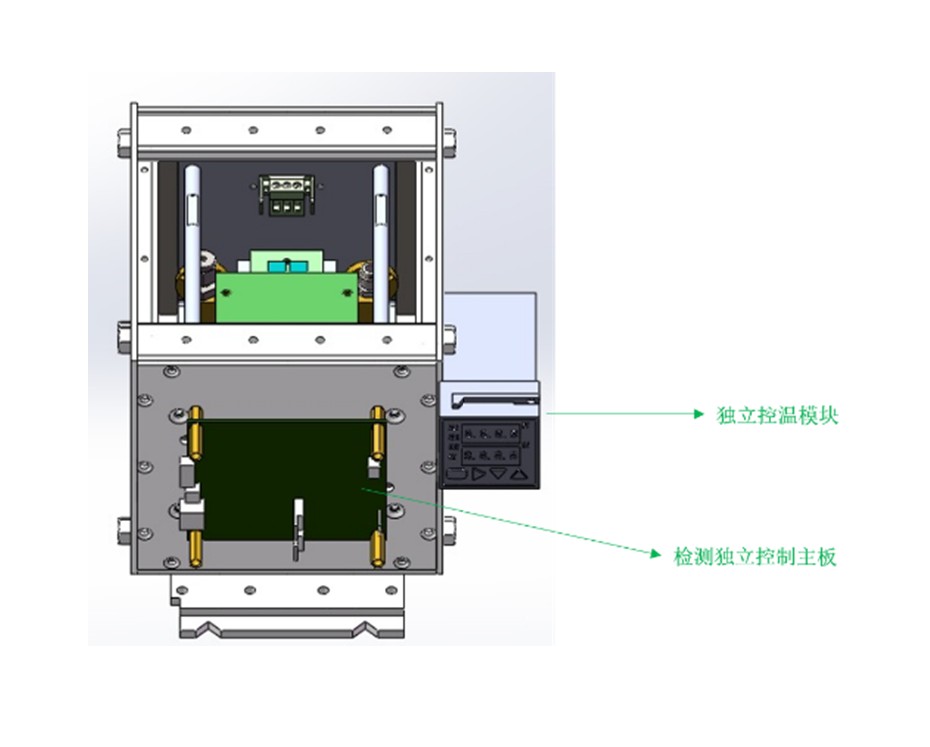
The optimal operating temperature for the thermal conductivity detector (TCD) is 60°C. In actual use, we have found that ambient temperature has a certain impact on the TCD, especially in winter. For laboratories without heating or air conditioning, the low indoor temperature typically requires 3–4 hours for the TCD to reach 60°C, which delays analysis time. The DN3000's detector employs an independent temperature control module that uses a temperature sensor for real-time monitoring and feedback control of the TCD temperature, with a temperature control accuracy better than 0.1°C. It can automatically adjust the detector's heating ramp rate based on the laboratory ambient temperature, allowing the instrument to reach normal operating temperature in approximately 30 minutes, thus saving analysis time.

The thermal conductivity detector is a universal detector; however, for the Dumas nitrogen analyzer, its particularity lies in the use of oxygen during the combustion process. When the reducing agent becomes ineffective, excess oxygen may enter the detector. The DN3000's TCD uses thermal conductive elements made of special materials that are insensitive to oxygen interference. The detector has been validated through tens of thousands of experiments, delivering high data accuracy. The standard curve remains stable without drift for over a year, ensuring reliable and consistent results.
Independently Temperature-Controlled High-Sensitivity Thermal Conductivity Detector
4 Three-stage dehydration system — easier and more efficient moisture removal
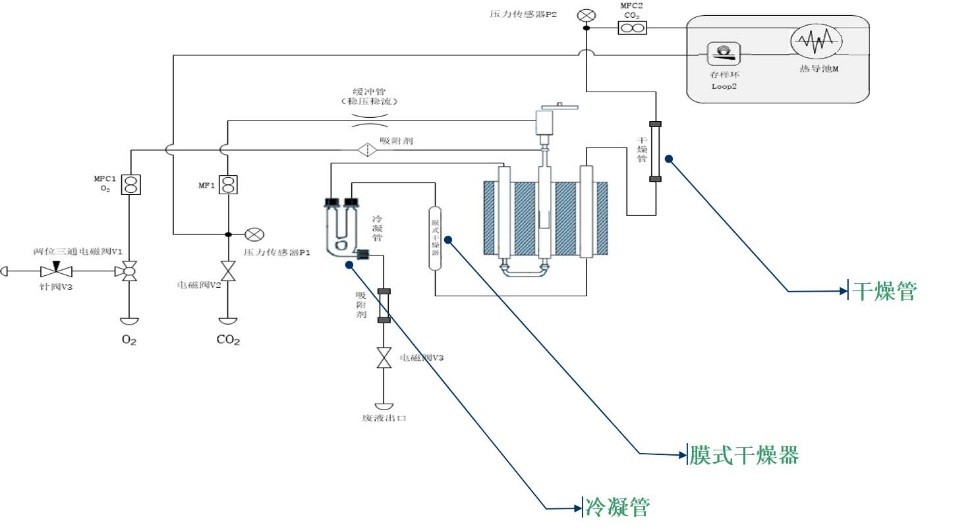
DN3000 Dumas Nitrogen Analyzer employs the world's most advanced and effective three-stage moisture removal system, consisting of a condensation tube (physical water removal), a membrane dryer (membrane material, permeation-based water removal), and a desiccant (chemical adsorption). The condensation tube removes the bulk of the water, the membrane dryer removes trace amounts of water, and the desiccant removes ultra-trace amounts of water. This approach ensures excellent water removal efficiency while significantly reducing the consumption of chemical reagents, thereby lowering analytical costs. The condensation tube is made of metal, specifically a Peltier metal condenser. It is particularly worth noting that the membrane dryer is a translucent device that allows only water molecules to permeate through — it is a maintenance-free physical water removal method and is a unique feature exclusive to the DN3000 Dumas Nitrogen Analyzer.
Three-stage dehydration system — easier and more efficient moisture removal

Welcome to contact us

Sincerely looking forward to discussing cooperation, exchanging ideas and seeking mutual growth with partners worldwide.