
Product Introduction
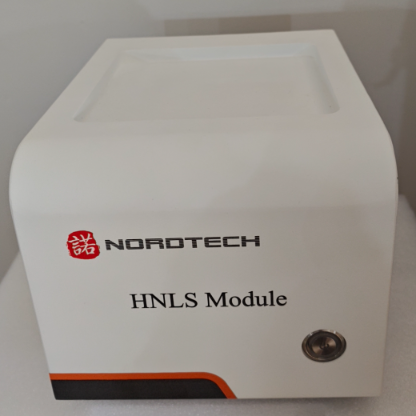
In practical applications, the ultraviolet fluorescence detector responds to both sulfur dioxide (SO₂) and certain nitrogen oxides (NOₓ), causing significant interference in sulfur measurement when analyzing high‑nitrogen samples. Nordtech's High‑Nitrogen Low‑Sulfur Module (HNLS) utilizes a chemical reaction‑based approach to effectively reduce the impact of nitrogen on sulfur detection, thereby enhancing the accuracy of sulfur analysis. This technology is particularly well‑suited for applications with stringent sulfur content limits, such as China National V gasoline and diesel standards, as well as diesel detergent national specifications.
Theoretically, the ultraviolet fluorescence detector should respond only to sulfur dioxide (SO₂). In practice, however, growing evidence and experimental data indicate that the detector also exhibits a certain degree of response to some nitrogen oxide species. Consequently, the interference of nitrogen on sulfur determination is especially pronounced in high‑nitrogen samples.
The figure below presents experimental results from instruments manufactured by three different companies, illustrating the effect of nitrogen on sulfur detection.
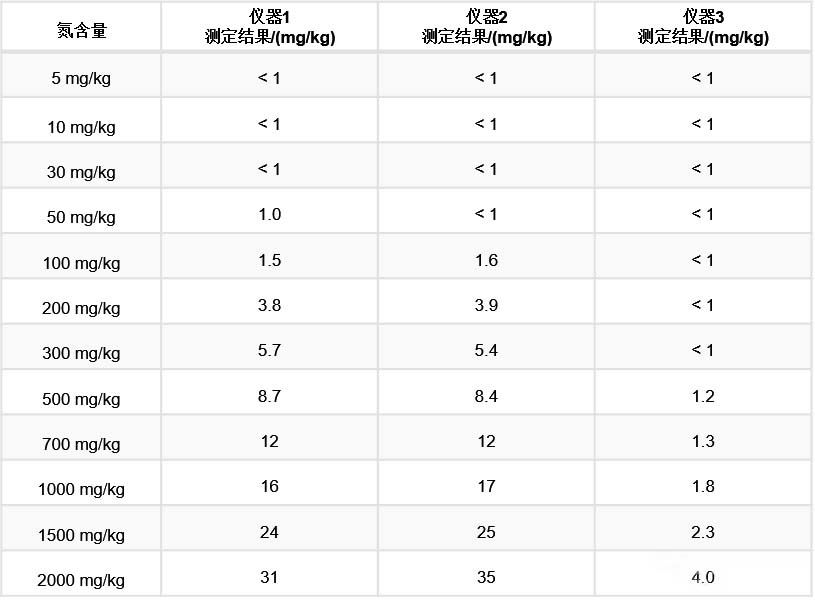
The experiment used samples with identical sulfur concentrations, with varying amounts of nitrogen added. As shown in the table, the interference with sulfur determination increases progressively with rising nitrogen concentration.
To address this nitrogen‑induced interference, Nordtech has developed the High‑Nitrogen Low‑Sulfur Module (HNLS) following extensive research. By employing a chemical reaction mechanism, the HNLS effectively eliminates nitrogen interference, significantly improving the accuracy of sulfur analysis.
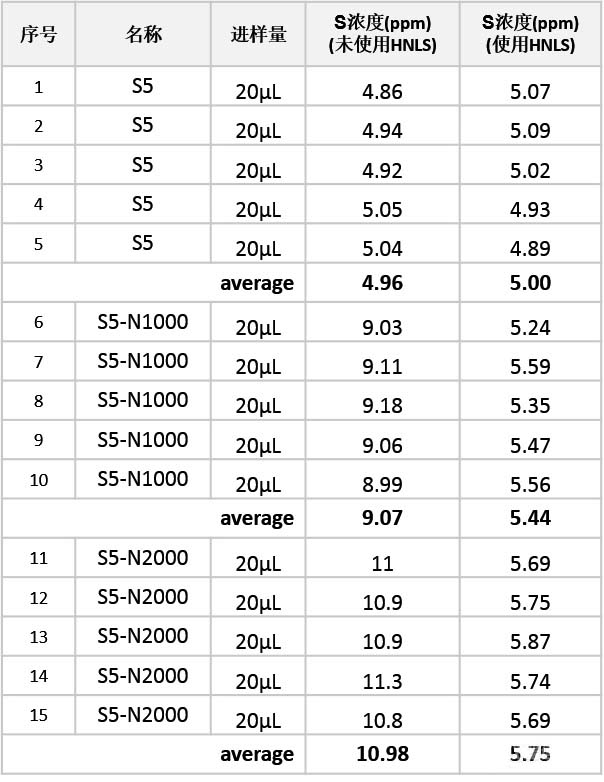
Application Example 1:
Following the implementation of new national standards, sulfur content requirements have become increasingly stringent. For instance, China National V gasoline and diesel standards mandate sulfur levels not exceeding 10 ppm. If a sample contains 9 ppm sulfur — theoretically compliant — but nitrogen interference contributes more than 1 ppm positive bias, the measured result could erroneously exceed the specification, rendering the sample non‑compliant.
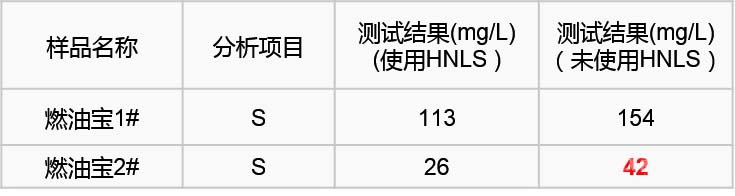
Application Example 2:
Fuel additives, commonly known as "fuel boosters" (fuel detergents). The national standard GB/T 32859-2016 Diesel Fuel Detergent explicitly stipulates that sulfur content in diesel detergents must be < 30 mg/kg. However, diesel detergents typically contain nitrogen levels in the thousands of ppm, creating substantial interference with sulfur measurement.
Sincerely looking forward to discussing cooperation, exchanging ideas and seeking mutual growth with partners worldwide.